

The Odyssey comes out in two weeks and I’m debating if I should pause everything to cram in a 541-page Greek epic before the movie. Compared to the 3-hour film, this is a 25-hour commitment, doable but disruptive. Too much to read in too little time, as usual. The movie is an 88% text-to-screen compression, but what might an 88% literary compression look like? The epic is divided into 24 books, so I could just read books 9, 11, and 23 the day before—giving me the cyclops, the underworld, and the return to Penelope—but that cuts out the arc of the epic, which probably defeats the point of reading it. Instead of curating chapters, could there be an abridged 65-page version that doesn’t neuter it?
It turns out there is a “structurally complete” compression, The Essential Odyssey by Stanley Lombardo, bringing 138,000 words down to 60,000, a 57% shortening. It’s a respected translation, but also controversial for sanding away Homer’s voice and replacing it with a more accessible, more Americanized version.
The ethics and techniques of radical compression are top of mind because I find myself doing this for the classic essays we read in Essay Club. We jump on a call, co-read for 30 minutes, leave analytical comments in the margins, and then talk it through as a group. We can realistically only cover 2,500 words together, but some of the classics I’ve picked are over 10,000 words. This creates a real (and welcome) editing challenge: can I compress 75% of a classic while retaining the essence? I won’t bore you with the specifics, but it involves re-reading it 5-10 times and progressively tightening the scope of chiseling, from paragraphs to sentences to words.
I hesitate to conclude that shorter is better. I don’t want to concede to the Age of Compression, to accept that the average attention span is dwindling, to reduce everything down to its bones so it’s legible in a scrollable feed. I also would never insist you suffer through a centuries-old original before you’re ready just because it’s deemed a masterpiece. Rather, I think a work can be translated not just in language, but translated for different constraints and attention spans. A book or essay can have multiple LODs (“levels of detail”)—different zooms of the same fractal. Consider how the famous David Foster Wallace essay “Shipping Out” is the magazine-edited version, less than half the length of the unabridged, “A Supposedly Fun Thing I’ll Never Do Again.” While they’re essentially the same, it’s worth reading both: first, the shorter one to get the kernel, and if you love it you can try the unabridged version, so you have enough context to appreciate all the details, nuance, and footnotes that would burn out a first-time reader.
A good abridgment isn’t a replacement, it’s a portal that points back to the original. I figure I’ll start with The Essential Odyssey, then see Nolan’s movie, and someday read the unabridged translation by Lattimore, the physical copy from my grandfather’s bookshelf, and I imagine I’ll appreciate all the details better once I know the shape of the fractal.
Some related notes and links on compression, writing, and Essay Club:
Montaigne is considered the first modern consciousness put into prose, and so you might think, from that summary, that his ideas are all original. But when you read him you quickly realize he’s constantly quoting, remixing, compressing, and summarizing the ancients. In many cases, his interpretations resonate with me much more than the source, and so maybe all great ideas need a A Remix Per Century.
I’m loving the new cadence of Essay Club readings. It gives me a weekly forcing function to read a classic deeply, compress it and visualize it, present it, and then talk through it with a group. This feels like the recurring work of finding the secret architecture of great essays. I’ve been slow with diagramming writing in the last two years, because there’s been much to do in building out the pattern language and the project around it, but now I feel back in my element. Let’s do this 100 times.
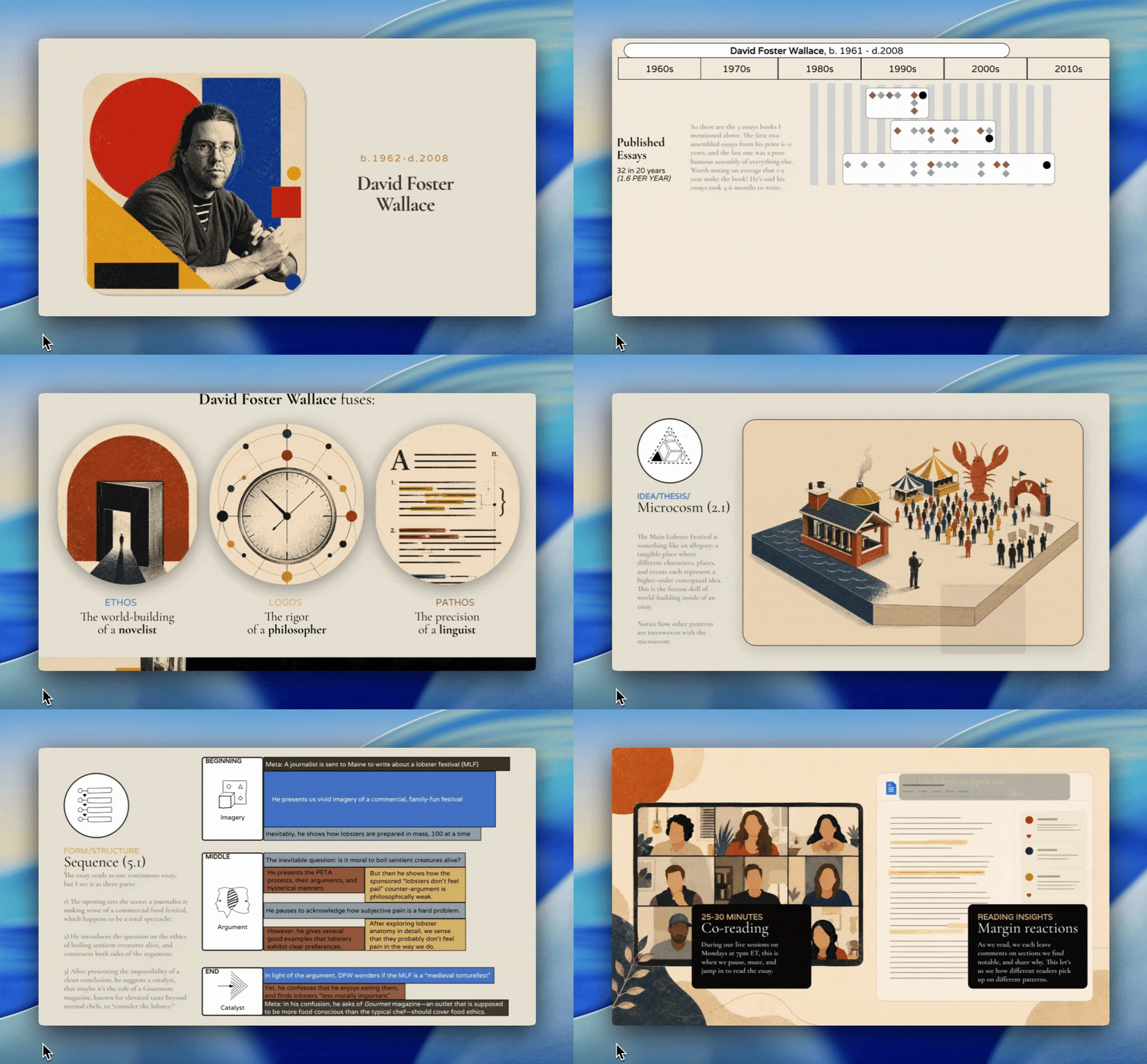
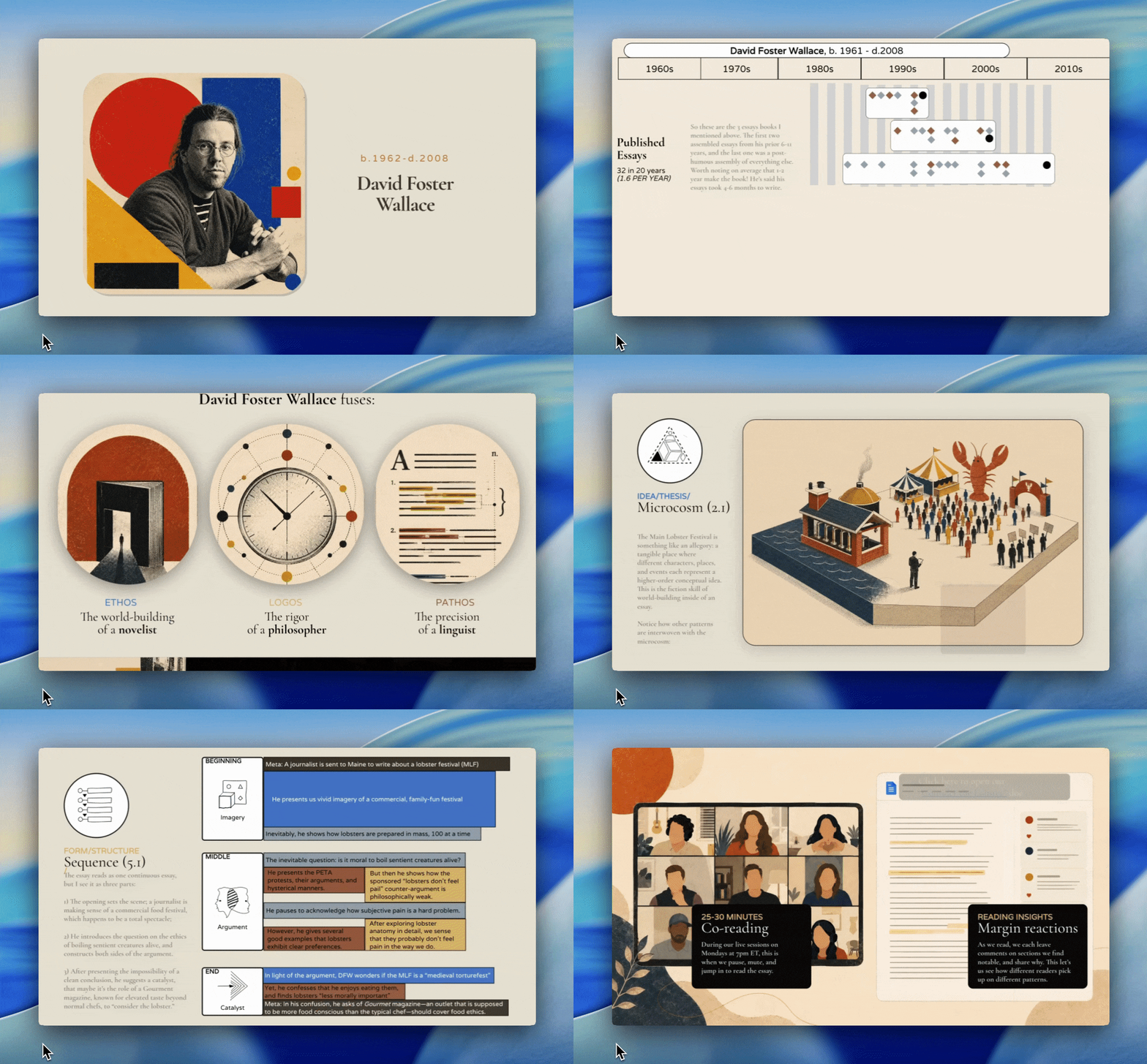
For our summer syllabus, I host readings every Monday at 7pm ET. If you can’t make that time (I know it’s tricky for Europe), I share the lesson slides and annotated readings after the session. Here’s an example from our first essay, where I diagram David Foster Wallace and his essay “Consider the Lobster.” (I recommend opening the link below on desktop)
Last week we read “The Empathy Exams” by Leslie Jamison, which is a staple of the mid-2010s personal essay boom, exemplary in the patterns of Experience, Threads, and Tone. The original was 9,600 words, and so getting this down to 2,900 was my first real compression challenge. Someone in our club tried the original before our call but fizzled out; after the abridged version in our group session, they felt energized to trek through the original…
This makes me wonder if there’s value in an essay anthology of 100 abridged classics, letting you quickly survey the whole genre in one read. The goal would be to help you find writers you like, and point you to their original full-length works.
Two years ago (on July 3rd) I wrote a cover of Self-Reliance by Ralph Waldo Emerson on a typewriter. I call it a “cover” and not a “compression” or an “abridgment” because I wasn’t concerned with staying faithful to the original, nor presenting it to anyone else. It was for myself, to process the ideas I found most personally salient. I picked the top 10% of my favorite excerpts, restructured them, and stitched them together.
Reading Emerson in July feels like a non-controversial way to celebrate America. I’m about to start a full trek through his essays, and after wading through libraries of Kindle slop on Amazon, I settled on The Essential Writings of Ralph Waldo Emerson (Modern Library Classics).
We’re covering “Self-Reliance” in Essay Club on Monday, July 6th at 7pm ET. (I’m working on a new compression that will be 2.5x longer than my original cover, but 4x shorter than the original.) I’ve brought up our summer syllabus a few times now, but I should also mention that the club includes weekly feedback calls (Fridays at 3pm ET), monthly publishing accountability (we publish by the 1st), free uploads in the Essay Architecture software, and access to the full textbook.
(In the Classical Wisdom Substack Live "The Real Odyssey" Joel Christensen suggests the Hines? graphic novel if you don't know the story. According to him the two translations most faithful to the Greek are Lattimore and Mendelsohn)
I'm loving Essay Club! I know the compressions started as a logistical necessity, but I'm finding reading both versions really interesting. For some essays, the compressions seem like the acoustic version of a song. Not a gateway, not a lesser version, more a different take that lets you hear the content in another way.