


Early parenthood has brought a cyclical, home-bound routine, and while it often feels impossible to find predictable focus time, there’s an unexpected surplus of spontaneous reading time. This naturally spurred a meta-process of questioning why, how, and what I should read. It’s impossible to know exactly how reading changes you, but over time it gets imperfectly synthesized in your own writing. If an essay is a conglomeration of your experience and your reading, then you’re limited only by your life and library. You become your syllabus.
Some related thoughts and projects:
How should an essay writer read differently? While I read history and non-fiction for ideas, poetry and fiction for feeling, I usually read essays for form. Here’s a new essay about the process of shaping a reading practice so that it oozes into your writing.
Here’s the summer syllabus we’re running inside Essay Club:
David Foster Wallace, (6/22)
“Consider the Lobster”Leslie Jamison, (6/29)
“The Empathy Exams”Ralph Waldo Emerson, (7/6)
“Self-Reliance”Susan Sontag, (7/13)
“Notes on Camp”Meghan O’Gieblyn, (7/20)
“Homeschool”Michel de Montaigne, (7/27)
“To philosophize is to learn how to die”Virginia Woolf, (8/3)
“Street Haunting”George Orwell, (8/10)
“Shooting an Elephant”E.B. White, (8/17)
“Once More to the Lake”Jo Ann Beard, (8/24)
“The Fourth State of Matter”Joan Didion, (8/31)
“Goodbye To All That”G.K. Chesterton, (9/8)
“On Lying in Bed”
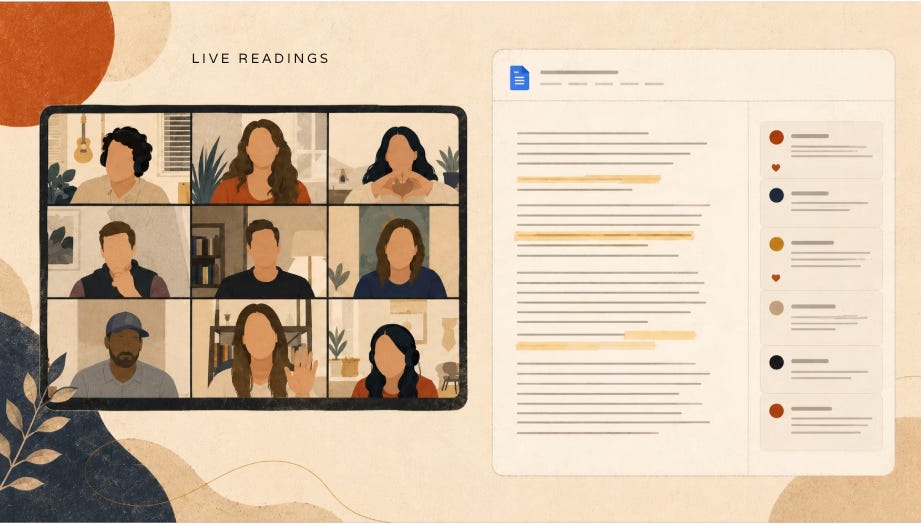
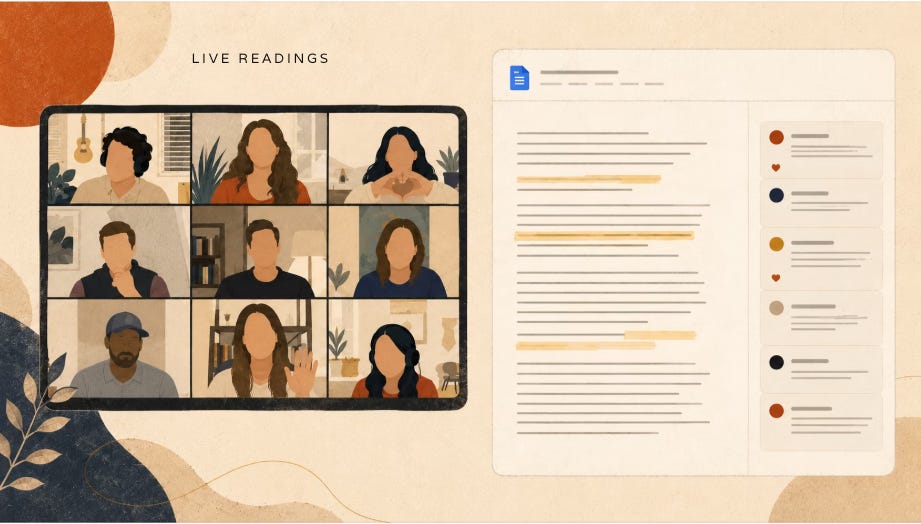
You can read through this list on your own (which is why I shared the links above), but reading ambitions are easy to deprioritize when things get busy. As part of Essay Club, a community of ~60 writers, we’re running sessions every Monday at 7pm ET where we analyze an essay together. I open with a quick presentation, then we all co-read in the same shared doc—commenting in the margins as we go—before jumping into breakouts and group discussions.
When I tell people I’m reading a book called How to Read a Book, I get an inevitable chuckle. Why would a literate person need that? And how could an illiterate person read it? Reading isn’t a binary skill, but a combination of techniques that all get stacked, like carpentry, writing or skiing. This passage gets at it:
“The point about skiing is that you should not be thinking about the separate acts that, together, make a smooth series of linked turns—instead, you should merely be looking ahead of you down the hill, anticipating bumps and other skiers, enjoying the feel of the cold wind on your cheeks, smiling with pleasure at the fluid grace of your body as you speed down the mountain. In other words, you must learn to forget the separate acts in order to perform all of them, and indeed any of them, well. But in order to forget them as separate acts, you have to learn them first as separate acts. Only then can you put them together to become a good skier. It is the same with reading.
Probably you have been reading for a long time, too, and starting to learn all over again can be humiliating. But it is just as true of reading as it is of skiing that you cannot coalesce a lot of different acts into one complex, harmonious performance until you become expert at each of them.”
In addition to the Essay Club reading list, I’ve also worked out a multi-year personal reading syllabus (perpetually WIP). This was probably the first time I’ve attempted inspectional reading, which is about reading a whole book in 20 minutes to decide if you should spend 20 hours on it. It involves reading reviews, the table of contents, a few paragraphs from each chapter, intuiting the tone, and asking Claude questions.
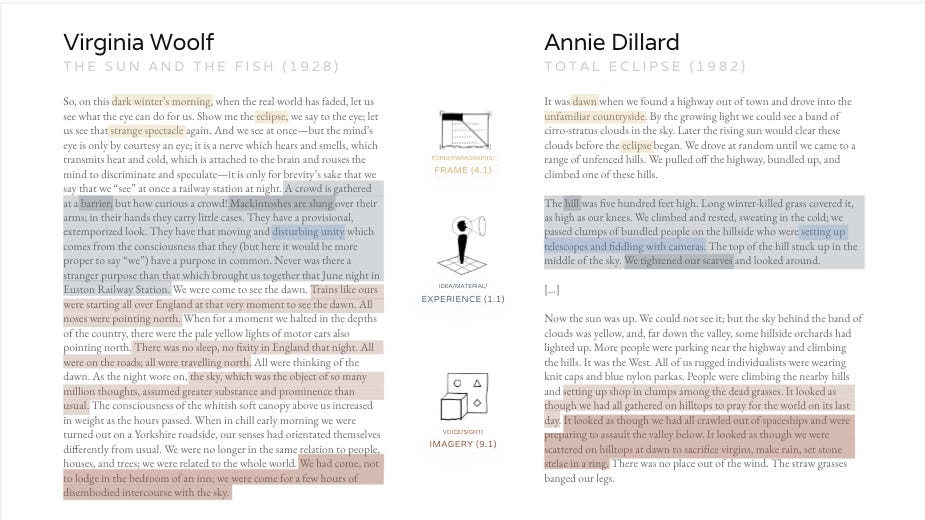
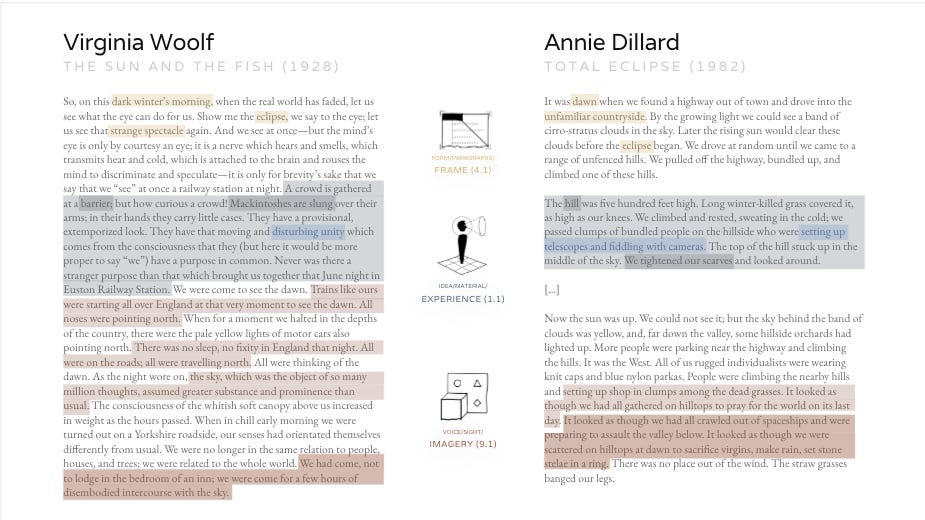
Syntopical reading (the fourth of four levels) is when you read analytically across multiple works and triangulate concepts. My pattern language enables this for essay composition. At our workshop on Monday, we compared excerpts by Woolf and Dillard—fifty years apart, both about a total eclipse—to see how the same patterns are used in different ways to achieve different effects.
Garrett Kincaid—who was featured in The Best Internet Essays 2025—is self-publishing a book about his time backpacking across Iceland for 81 days. Pre-order Beneath the Glacier here.
A Blog Succession Plan: Every morning I get an obituary emailed to me from a nearby funeral home and see a complex human life get compressed into 350 words. I also stumbled upon the obituary of a fellow essay evangelist who died in 2019, which included a link to a website of all his writing, only to find that the domain expired. Check out my new essay where I think through 100-year domains.
Ask me anything. This week I found myself in a few email chains with friends where we basically wrote short essays back and forth to each other. Letters unlock something. You’re writing for an audience of one instead of a theoretical mass (I sense that a broadcast-only regime is a quick way to burn out). I found myself more compelled to write impromptu email essay responses than to write about the topic I planned on that morning. Feel free to reply to this—or email michael@michaeldean.site—and send me a question, or a draft, or a book recommendation, or anything, and I’ll write you back.
Essay Club’s summer syllabus starts on Monday! You can join any time, but sign up before July 4th to get a 25% discount (down to $450/yr, and you keep that rate forever). Either way, hope you found some inspiration in planning your summer reading.
Just joined the club!
Just joined as well!